Why formulary brand groups
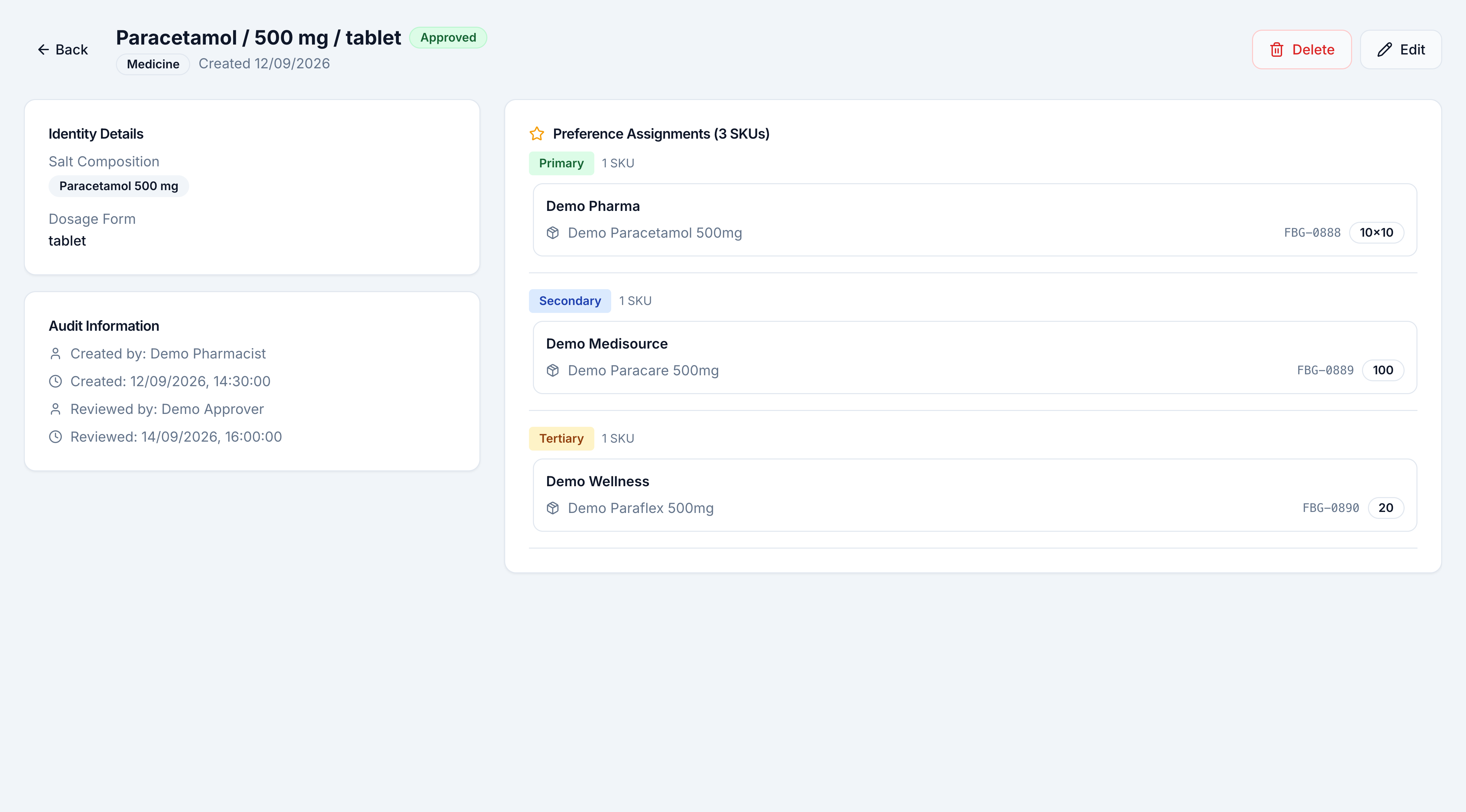
A pharmacy often stocks several brands of the same tablet. Paracetamol 500 mg from Demo Pharma, Demo Medisource, and Demo Wellness is one clinical item and three buying choices. Without a group, each SKU is just another product, and every buyer makes the brand decision again.
A formulary brand group names the item once — salt, strength, and form — and records the order you want brands bought in.
What problem it solves
Buyers and the reorder engine need a single answer to “which pack of this medicine do we prefer?” The group is that answer. Primary is the preferred brand. Secondary is the acceptable substitute when primary is unavailable. Tertiary is the last fallback.
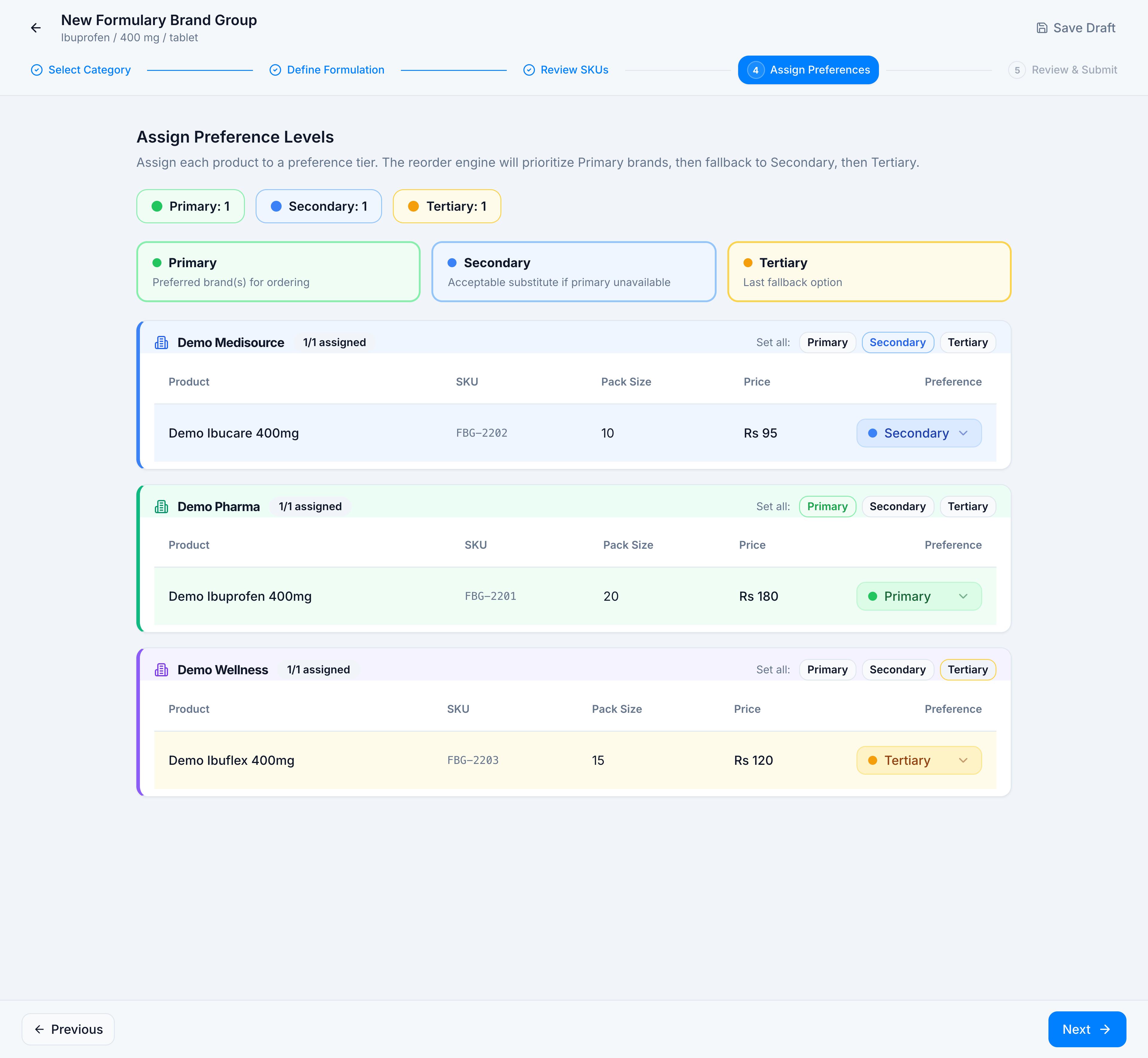
Approval keeps that answer from changing quietly. Submit for Approval routes the group through the Approval Center. If no workflow is configured, it is approved automatically. An edit to a group that is already approved waits as a modification, and the current ranking stays in place until the modification is approved. Once approved, the dialog tells you the group is active in the reorder engine.
When a group is the wrong tool
- The catalog has a single product for that identity. There is nothing to rank.
- The products are not the same item. A different strength or a different dosage form is a different group. Ibuprofen 400 mg tablets and a different strength do not share a group.
- You only need a selling bundle of unrelated products. That is Package Products, under Catalog → Products → Package Products.
How the name is decided
The name is generated from the identity, so two people cannot describe the same medicine two ways. Medicine names join the salt, the strength and unit, and the dosage form. Other categories use their own fields: vaccine type, surgical type and size and material, disposable type and size, IV solution, or nutrition product type. The suggested-groups dialog reads those identities from the products you already sell, and marks Already Created when the library has that identity.